
13 October 2026
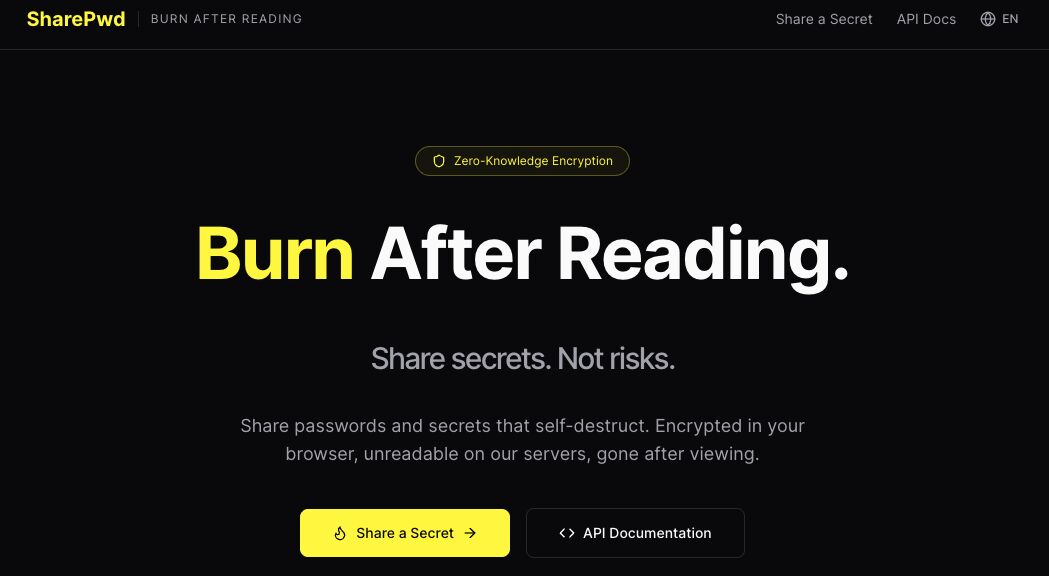
At Jizô AI, sharing secrets is part of daily life: passwords, API keys, and sensitive files constantly flow between team members, clients, and partners. Like many technical teams, we kept running into the same problem: how do you securely transmit a secret without sending it in plaintext over Slack, Teams, or email?
Existing solutions didn't meet all our requirements. Some are hosted in the United States and subject to the Cloud Act. Others are closed source, with no possibility of code audit. Others are too limited: no CLI, no API, no file support. None offered the complete trifecta: secure, sovereign, and integrable.
So we built SharePwd.
The solution is built on a strict zero-knowledge architecture. The secret is encrypted directly in the sender's browser using AES-256-GCM. The decryption key is embedded in the URL fragment the portion after the # and never reaches our servers. What we store is an encrypted blob that we are technically unable to read, even if we wanted to.
The recipient opens the link, decryption happens locally in their browser, and the secret self-destructs. Burn after reading — but unlike the Coen Brothers film, everything goes according to plan here.
SharePwd is not a showcase project. It is a tool we use daily at Jizô AI for our own operational needs. It is precisely because it addresses a concrete and unsolved market need that we decided to share it.

We needed a tool to share secrets. Secure, sovereign, no compromises. We couldn't find it. So we built it.